Jill, you came back to the beautiful islands of Chuuk where you spent your teenage years growing up. Why did you accept the opportunity to become a teacher and student mentor at Faithwalk Christian College (FCC)?
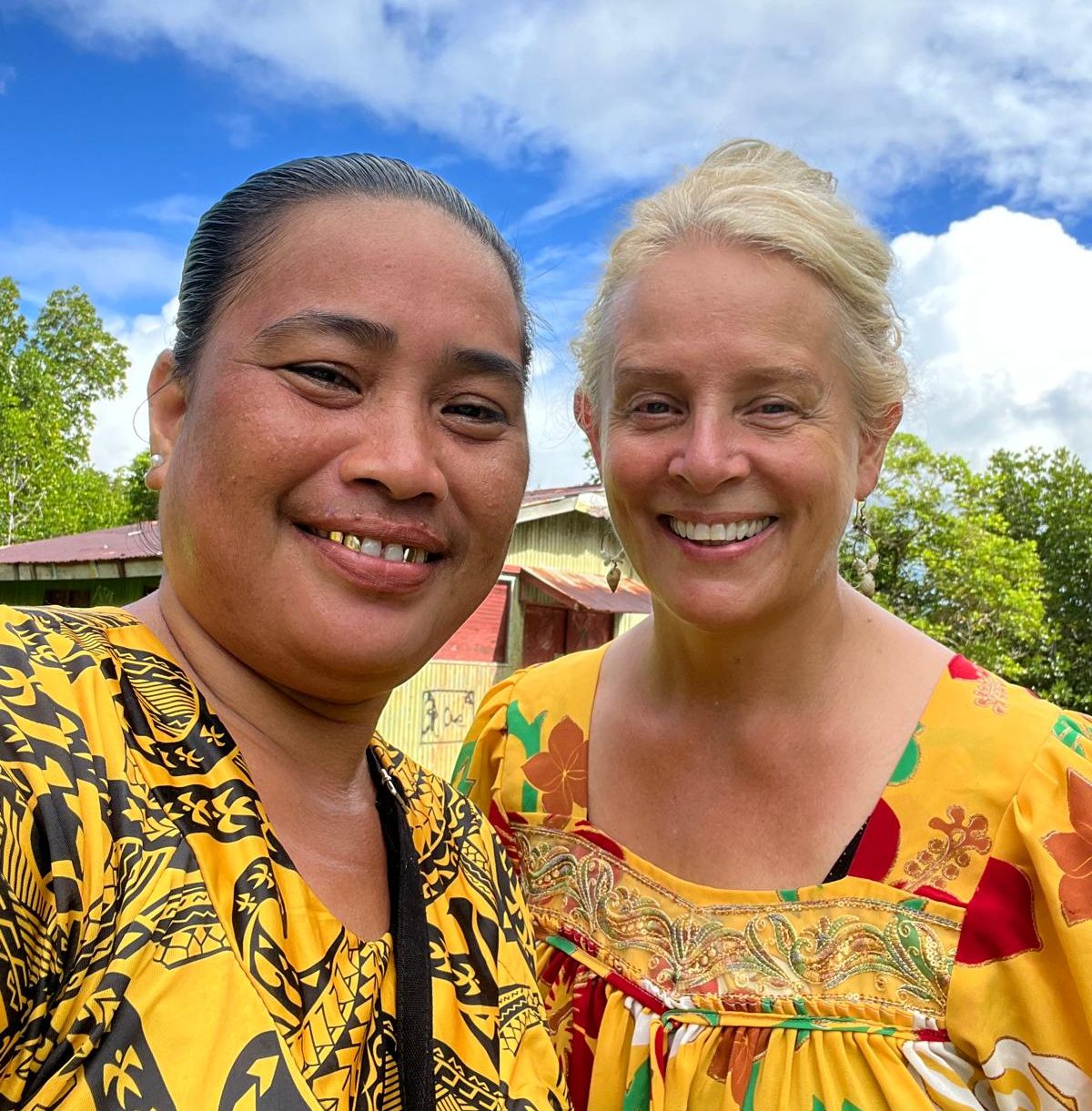
The islands of Chuuk deeply shaped me culturally and spiritually. Coming back for a short-term assignment in 2024 and then again in 2025 felt like coming home, though now as an adult with parenting experience. As I participated in facilitating an RIC community health program on Tol Island, I got to know “Mama” Adryn (picture above) alongside other parents faced with the challenges of parenting and providing education that will help their children thrive at home on their islands as well as abroad. So when the staff of Faithwalk Christian College on Tol Island asked me to join their team, I was excited about the opportunity to help develop the next generation of Chuukese leaders—especially our young women—through teaching English, mentoring, and sharing our daily lives.
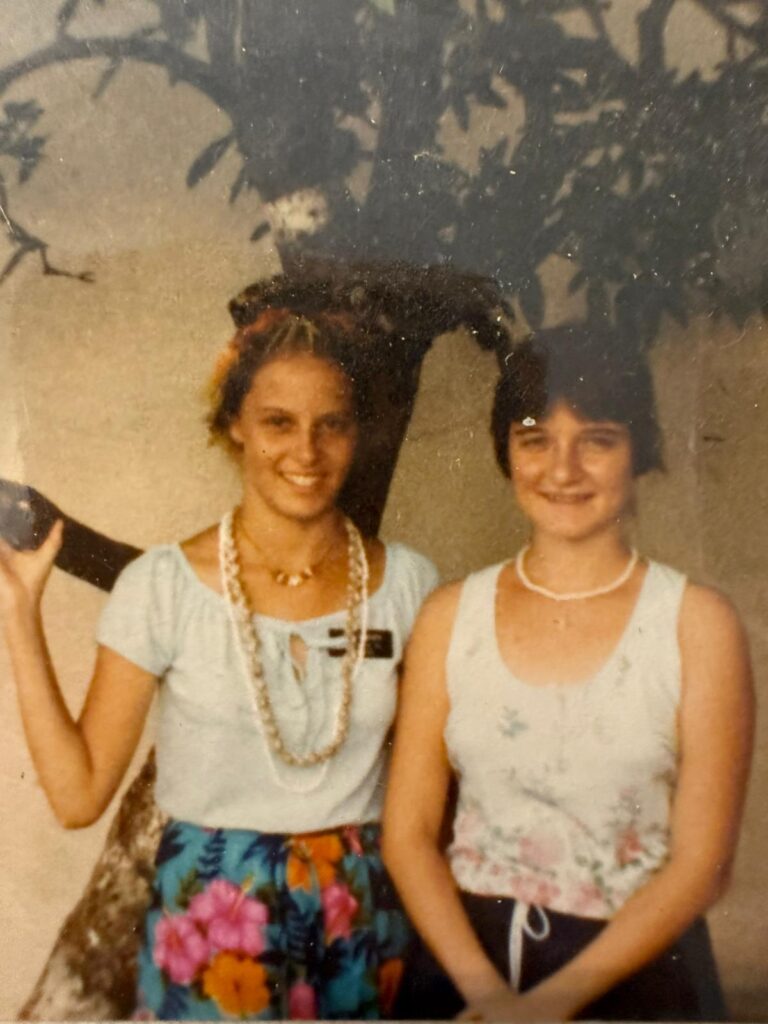
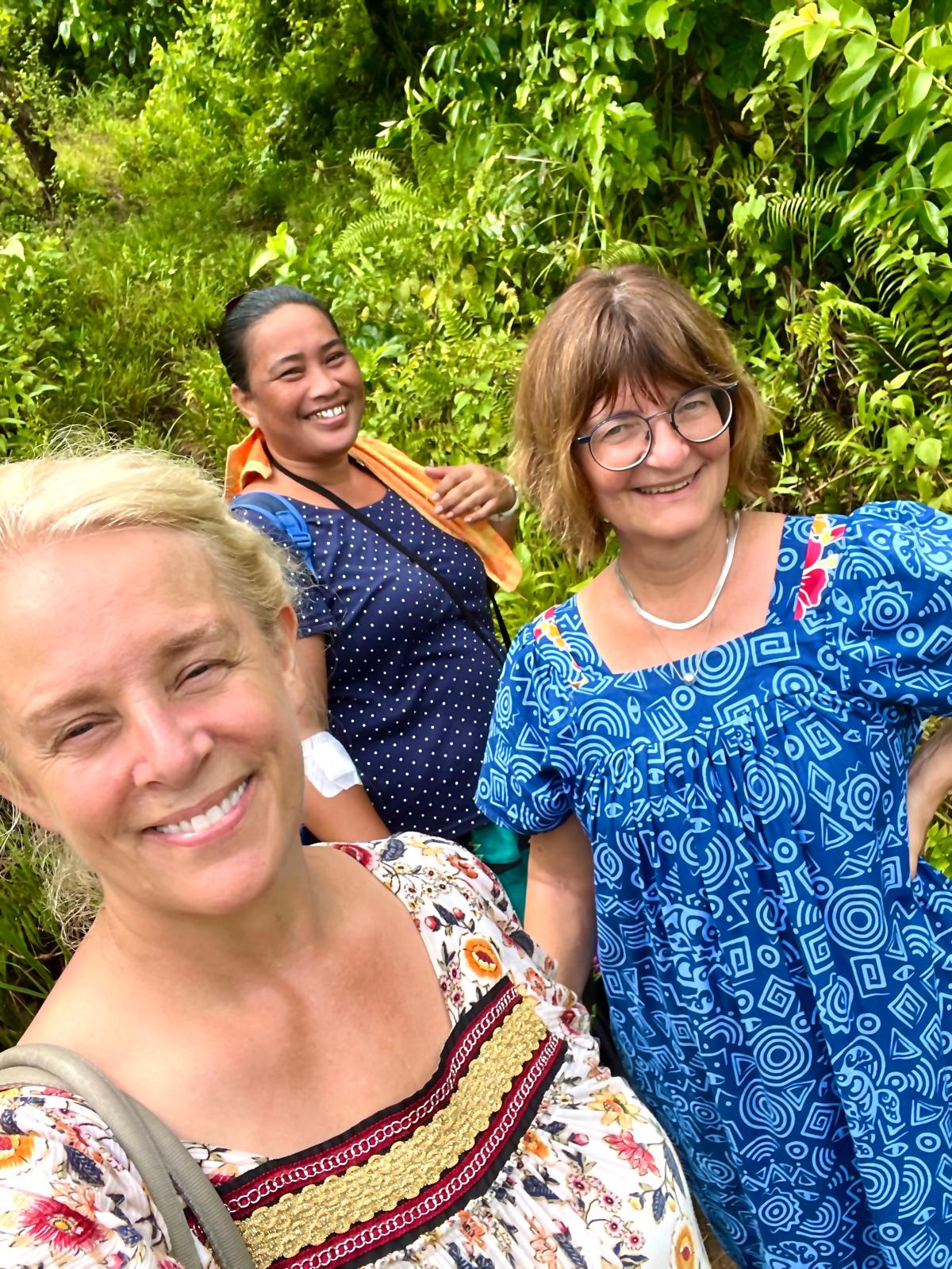
Jillian Short and Elizabeth Rauchholz as teenagers in the 1980s
Considering how food grows in the backyard, and the fish of the ocean are in arm’s reach, why does learning to read and write add value to island life?
The islands are abundant in natural resources, and there is profound wisdom in the way Chuukese communities rely on relationships as they live in dependency upon the land and sea. At the same time, literacy opens doors for us on the islands because it helps us protect and enhance our beautiful island life rather than replace it with a way of life that limits its potential. Reading, writing, intercultural, and social communication skills also equip students to respond to the effects of global issues. Reading helps us understand and navigate our world such as when doing so from the perspective of our own Chuukese Bible.
From your perspective, why is reading and understanding the Chuukese Bible important?
Reading and discussing the Bible not only enhances Catholic and Protestant frames of moral references in social relationships, but also links Jesus Christ to each individual in their everyday life within communities at home and abroad. Jesus values each person, regardless of how poor or successful we may be considered by others. The ability to read the Chuukese Bible scriptures in the Chuukese island environment helps facilitate responsibility in caring for and advocating for the needs on the islands. Local churches are the central sites of engagement across all clan lineages, allowing for differences of opinion to be discussed alongside reconciliation where literacy is a value.
And do you ascribe relevance to the Chuukese Bible for navigating life beyond the community of church relationships?
Yes, my colleagues at Faithwalk Christian College (FCC) and I also find that the Bible helps our students and their families navigate the world beyond their islands, where they face the complexities of government systems, education, healthcare, economic relations, and migration.
Scriptural grounding, literacy, math, vocational, and social skills help young people confidently navigate both domestic and international settings, allowing them to honor their cultural roots with dignity and discernment.
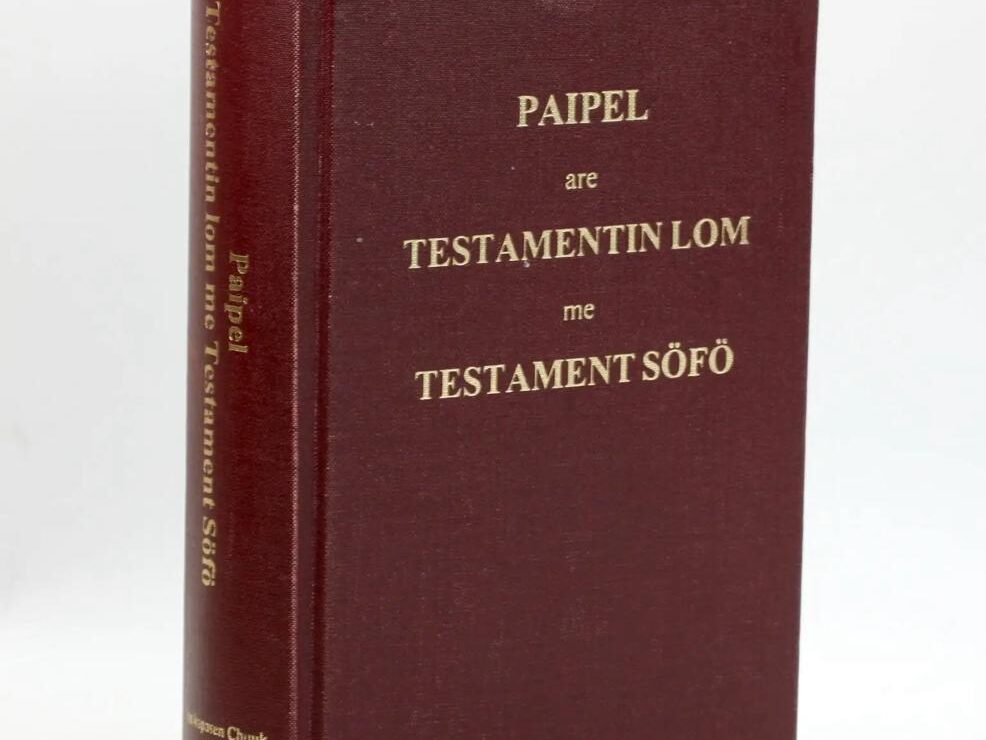
Chuukese Bible
As a mother of ten now grown-up children and working as a Chuukese–English court translator, what are some concerns on parenting you would like to encourage parents and grandparents to do for their children at home on their islands?
As both a mother and a professional, I witness the effects of unmet needs in the young clients for whom I translate and interpret in court. I gently encourage their parents to focus on their own personal presence, communication, and guidance in their children’s lives. Chuukese children thrive on relationships and a sense of belonging, but they also need consistent boundaries, encouragement to ask questions, and reassurance that their voices and abilities matter. I would encourage parents to speak with their children often, listen carefully, and affirm them—not only correcting behavior but also nurturing confidence, responsibility, and hope. Small, daily investments of time and attention can make a profound and long-lasting difference.
What would you want Chuukese parents to consider when their children grow up in the USA?
For Chuukese families raising children in the United States, I would encourage parents and grandparents to preserve language, cultural identity, and family connection intentionally. Children growing up between cultures can feel pulled in different directions, and they need help in understanding who they are and where they come from. Teaching respect for elders, maintaining the Chuukese language at home, and sharing stories of island life not only anchors them but also nurtures their sense of dignity and self-confidence. At the same time, parents should invest in helping their children learn to navigate American systems—schools, laws, and expectations—so they can live confidently and safely in both cultures without losing themselves.
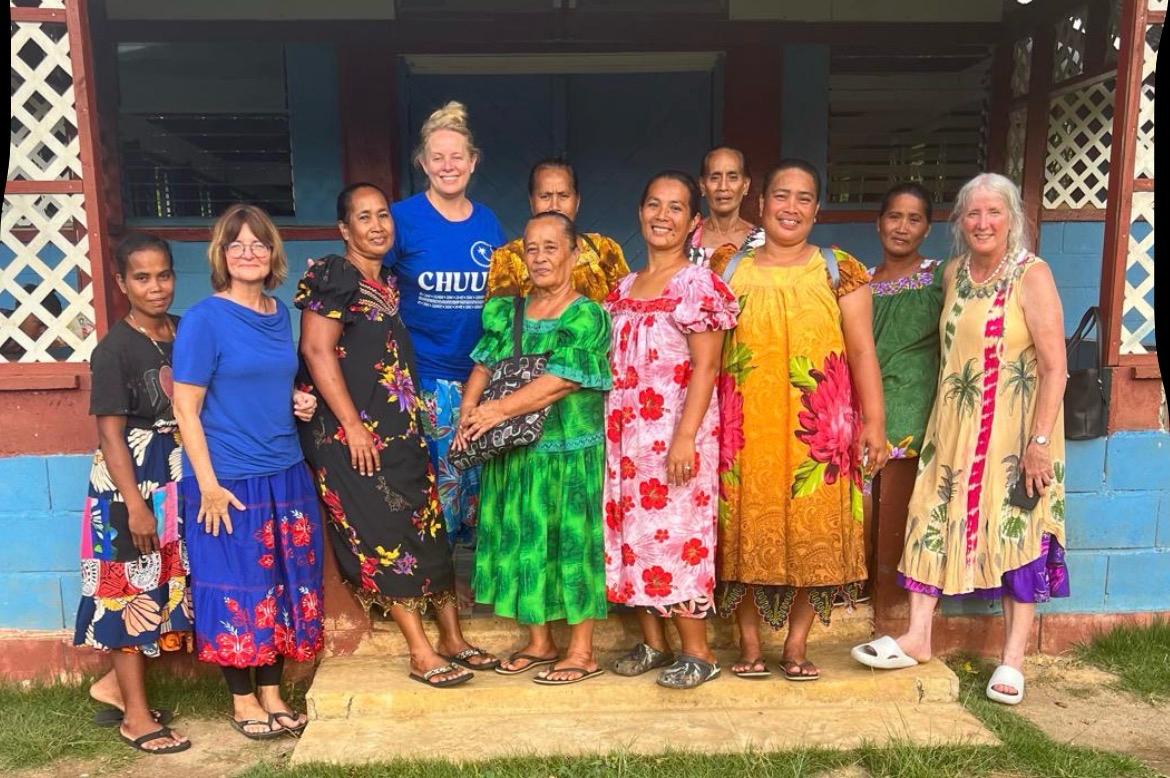
Jill Short, top center, and her sister on the right, with members of the RIC team and local friends.
What are some great values children learn growing up in Chuukese communities on the islands? What about in the USA?
On the islands, children grow up learning community responsibility, respect for elders, generosity, and interdependence. Life is shared, and children learn early that they belong to something larger than themselves. In the United States of America, children often gain independence, self-expression, and exposure to broader educational and vocational opportunities. Both environments offer valuable lessons. Ideally, Chuukese children—whether on the islands or in the USA—can carry the best of both worlds: strong community values alongside confidence, education, and initiative.
You wrote a book about your experiences in Chuuk and how you lived out your faith in a relationship with Jesus Christ, including Him in your social relations. How have you observed the presence of Jesus Christ in the social relationships of Chuukese you shared life with on the islands and in the USA?
I have consistently observed that faith among Chuukese believers is deeply relational. Jesus is present not only in church services, but in shared meals, communal prayer, hospitality, and care for one another in times of need. In both Chuuk and the United States, Chuukese Christians often live their faith out quietly but faithfully—through endurance, forgiveness, and commitment to community.
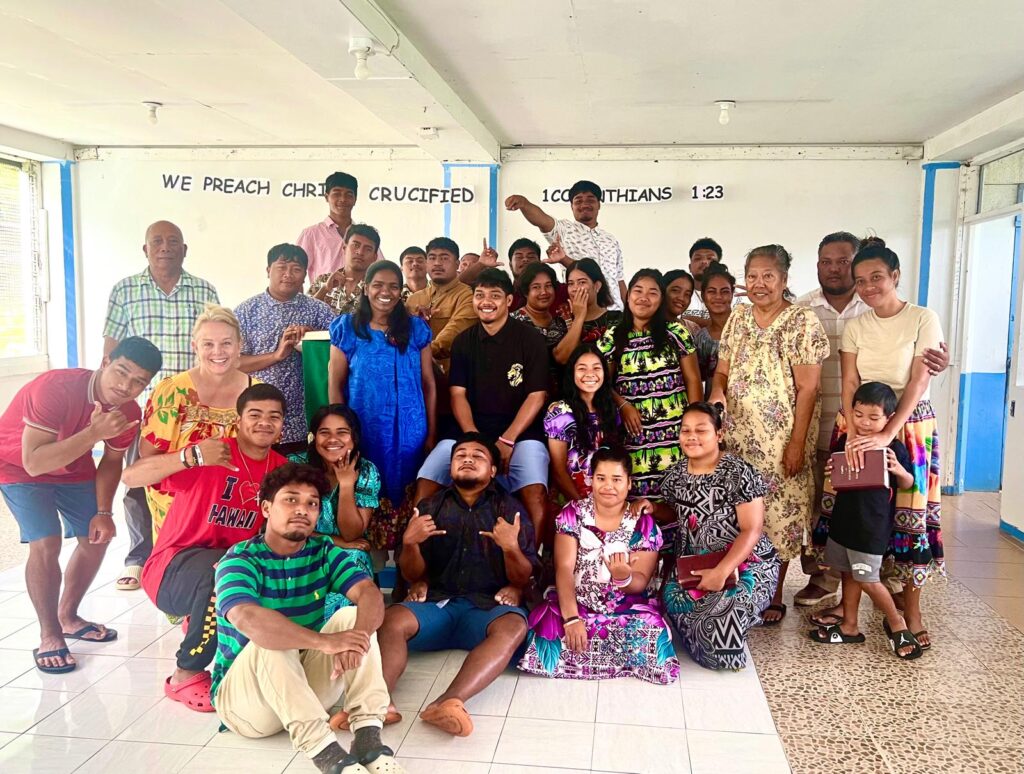
Jill with staff and students at Faithwalk Christian College
What can Christians who are not Chuukese learn from Chuukese who follow Jesus Christ?
Christians from other cultures can learn from the way Chuukese live out their faith: a faith that values relationship over performance, humility over recognition, and perseverance in the face of hardship.
Do you have a favorite Chuukese Bible verse that means more to you in the Chuukese language than when reading or hearing it in English?
Yes. One verse that holds special meaning for me in Chuukese is Romans 8:28. Hearing it in Chuukese carries a depth and warmth that feels especially fitting to the way faith is lived out on the islands—a reminder that God is present and at work even in seasons of waiting, hardship, and quiet faithfulness. In Chuukese, it feels less like a statement and more like a shared assurance spoken within the community:
“Sia silei pwe lon mettoch meinisin Kot a afisätä feiöchün chokewe mi echeni i chokewe i a köriir pwe repwe föri letipan.”